
Match 3D -Matching Puzzle Game
Lion Studios PlusPuzzle
4.575.18K Reviews
- Version
- 1246.1.0
- Installs
- 50.00M
- Age Rating
- Everyone
Screenshots
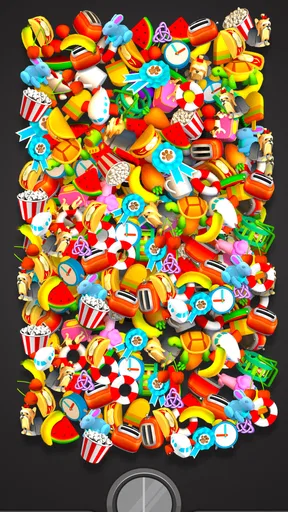
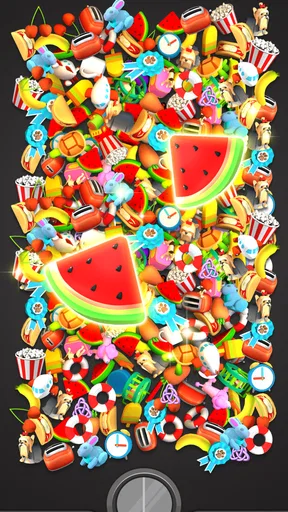
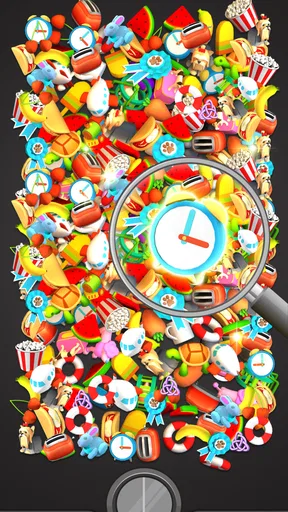
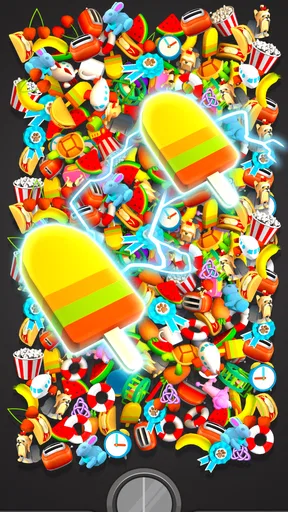
Our Review of Match 3D -Matching Puzzle Game
 Analysis by Appyee
I found Match 3D -Matching Puzzle Game easy to understand within seconds, but not so shallow that the first few rounds felt pointless. The basic task is to identify identical three-dimensional objects and pair them away, turning a crowded play area into a clean one. That simple idea gives the game an immediately calming quality, especially when I want something I can play without learning a complicated rule set.
It is a free puzzle game from Lion Studios Plus, aimed at Everyone, and it has grown into a very familiar mobile title with an average rating of 4.5 from around 567 thousand ratings and more than 50 million installs. Those figures suggest broad appeal, but they do not tell you whether its particular style will suit you. In my experience, the real question is whether you enjoy visual searching, repeated short sessions, and the small satisfaction of restoring order to a messy screen.
The game works best when I treat it as a brief mental break rather than a deep strategy experience. I can start a round, focus on matching shapes and colors, and stop when I have had enough. It is less suitable if I am looking for a story, a competitive puzzle system, or a constantly changing challenge that demands long-term planning.
A colorful world built from ordinary objects
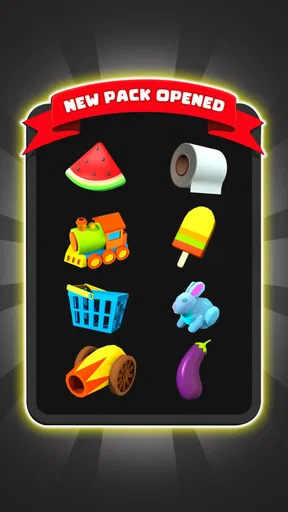
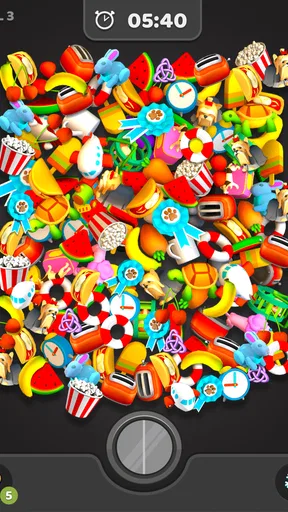
The visual identity is based on familiar items presented as playful 3D pieces. That choice matters because recognition is almost instant: I am not decoding abstract symbols or memorizing a fictional world. I am scanning for objects that look alike, then deciding which pair is easiest and safest to select. The setting is therefore less about narrative and more about visual order, color, and the contrast between clutter and completion.
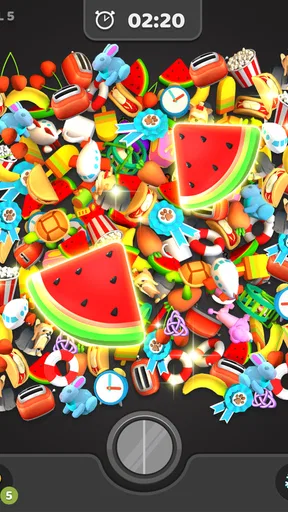
I like the way this art direction supports the central action. A flat grid could make the same matching rule feel rigid, while the three-dimensional presentation gives the board a more tactile appearance. Objects occupy space, overlap visually, and compete for attention. Even when the underlying action is straightforward, the screen feels like a small sorting problem rather than a list of icons.
That visual approach also creates one of the game’s main limitations. Similar-looking objects can become harder to distinguish when the board is busy, particularly if I rush through the available choices. The challenge is not always about finding a clever solution; sometimes it is about carefully separating items that share a color or general silhouette. Players with tired eyes may find longer sessions less comfortable than the relaxed presentation initially suggests.
My most useful habit was to pause before tapping. Instead of immediately choosing the first matching pair I noticed, I looked across the whole board and identified objects that were partly hidden or surrounded by distracting pieces. This small change made the experience feel more controlled. It also reduced the frustration of removing an easy pair while leaving a more awkward object buried underneath.
Why the 3D presentation changes the puzzle
The three-dimensional look is not merely decoration. It affects how I read the board. I have to judge position, visibility, and visual similarity at the same time. A pair may be obvious in isolation but difficult to notice when several objects share the same area of the screen. That makes the game a gentle exercise in visual attention, even though it never presents itself as serious training.
I would recommend using it in situations where a low-pressure visual task is welcome: during a short break, while waiting for an appointment, or at the end of the day when a more demanding game feels excessive. The ordinary-object theme helps because there is no story to follow and no fictional setting to remember. I can return after a few hours or several days and understand the board immediately.
On the other hand, the same simplicity means the game may not hold everyone for extended sessions. Players who prefer word puzzles, logic grids, or number-based challenges may find the object matching too dependent on recognition and timing. A traditional match-three game is usually better for someone who wants cascading combinations and board planning. This one is more about visual cleanup and the rhythm of finding pairs.
Sound, rhythm, and the feeling of a short reset
The mood depends heavily on pacing. Each successful match gives the round a small step forward, and the board gradually becomes less crowded. That steady reduction creates a natural sense of progress without needing a complicated story or dramatic event. I found the rhythm pleasant when I played slowly, because every pair felt like a small reset of the screen.
Sound supports that feeling rather than dominating it. The game’s appeal is visual first, so I would not choose it for a rich musical soundtrack or a strongly atmospheric audio experience. It works better as a quiet companion to a break. If I want to concentrate, I can focus on the objects and let the repeated matching actions provide the rhythm. If I am sensitive to repetitive effects, playing with the device muted may make longer sessions more comfortable.
This is where the game’s relaxing promise needs a little qualification. The presentation is soothing when the board feels readable and I am progressing steadily. It becomes less restful when I am searching through similar pieces under pressure or replaying a difficult situation. Relaxation is therefore connected to how I play: deliberate scanning creates a calm flow, while hurried tapping turns the same board into a source of irritation.
I also noticed that the game is naturally divided into compact moments. It does not require me to reserve a long uninterrupted block of time. A realistic use case is a commute with a few spare minutes, a pause between household tasks, or a quick wind-down before putting the phone away. The short-session structure is one of its strongest practical qualities, especially for people who dislike games that punish them for stopping suddenly.
How to keep the pace comfortable
My preferred approach is to begin by clearing the most visible pairs, then slow down whenever the remaining objects become crowded. I do not try to maintain a frantic pace. I scan from one side of the board to the other, remember the location of a matching object, and only then make the selection. This turns the round into a manageable visual routine instead of a reaction test.
Another useful adjustment is to avoid treating every obvious pair as equally valuable. A pair that is easy to reach may not be the best immediate choice if it hides a more distinctive object or leaves the board visually confusing. I found that alternating between clearing safe pairs and exposing harder-to-see pieces gave me a better sense of control. It is a modest tactic, but it makes the simple rules feel more thoughtful.
Players who want a game with a strong audio identity should set their expectations differently. The charm here comes from the combination of colorful objects, clean visual progress, and repeated actions. The sound is part of the feedback loop, not the main attraction. That is perfectly fine for a casual puzzle, but it means this is not a substitute for a music-driven game or a richly narrated adventure.
When the mechanics feel fair—and when they do not
The core mechanic is accessible: find two matching objects and remove them. I never needed a tutorial-heavy introduction to understand what the game wanted from me. That immediate clarity is valuable on a phone, where I may be playing with one hand and only partial attention. The challenge comes from visual density and decision-making rather than from rules that need to be memorized.
The mechanic fits the relaxed mood because every correct match produces visible improvement. I can see the board becoming simpler, which gives the session a clear direction. Unlike an endless free-form activity, a round has a practical goal: reduce the clutter until the puzzle is resolved. That sense of closure makes it easier to stop after one session instead of feeling pulled into an undefined loop.
There is also a memory element, although I would describe it as practical short-term recall rather than a formal memory exercise. I often notice one object, scan for its twin, and keep its position in mind while checking nearby pieces. When the board is crowded, I have to remember where a match was located and decide whether removing another pair first will make it easier to reach. This is a more interesting use of the simple rule than merely tapping identical items as quickly as possible.
A good workflow is to divide the board into visual zones. I might inspect the upper area, then the center, then the edges, keeping track of distinctive shapes rather than trying to memorize everything. This reduces random searching and is especially helpful when several objects use similar colors. It also makes the game more approachable for younger players or anyone who prefers an organized method over rapid reactions.
The trade-off is that the game’s depth depends on how much attention I choose to bring to it. There is no need to build a long strategy in the way I would in a complex match-three title, a Sudoku app, or a tactical puzzle game. Those alternatives are better when I want layered planning and a sense that every move changes a larger system. This title is better when I want a clear, low-friction task with a visible finish.
Free access and the mobile trade-offs
The game is free to download and play, which makes it easy to try without committing money at the start. It includes in-app purchases ranging from $0.99 to $199.99 per item, so anyone who spends inside the game should approach those options carefully. I would recommend deciding on a personal limit before playing, particularly if the game becomes part of a daily routine.
That pricing range does not change my view of the basic appeal, but it does affect who I would recommend it to. Casual players who only want occasional puzzle sessions can simply test the free experience and decide whether it earns a place on their phone. Families should also remember that an Everyone age rating describes the intended content audience, not a guarantee that every purchase decision will be suitable for every household. Device-level purchase controls are sensible whenever children can access the game.
The current version is 1246.1.0 and requires at least Android 8.1. That makes it available to many older devices, although practical comfort still depends on screen size and how clearly the objects appear on a particular display. On a smaller screen, visual scanning may feel more cramped. I would favor a larger phone or tablet for players who struggle to distinguish similar pieces.
I also would not install it expecting a narrative campaign or a competitive community experience. Its strength is the immediate puzzle loop, not social storytelling. If I want to compare scores, follow a plot, or develop a specialized strategy over many hours, another category of game will serve me better. If I want a familiar object-matching task that can fill a few spare minutes, the design is much more appropriate.
Who will enjoy the atmosphere most?
I think the best audience is anyone who likes visual sorting, gentle repetition, and puzzles that communicate their goal immediately. It can work for a quick mental reset after work, a quiet activity before sleep, or a small distraction while waiting. The bright object-based art makes the game approachable, while the gradual clearing of the board supplies enough progress to keep a short session satisfying.
It is also a reasonable choice for players who find traditional match-three games too busy. In a conventional match-three board, I usually look for chains, special pieces, and future combinations. Here, I can focus on recognizing pairs and managing what is visible. That distinction makes this game less strategic but often easier to enter when my attention is limited.
I would be more cautious about recommending it to people who dislike repetition or need constant novelty. The central action remains consistent, and its appeal depends on whether that consistency feels calming or monotonous. Players with visual fatigue may also prefer shorter sessions, lower screen brightness, and deliberate scanning rather than trying to rush through a round.
One less obvious benefit is that the game can become a small attention ritual. I can use the same process each time—survey the board, clear obvious pairs, expose hidden areas, then slow down for the final objects. That routine gives the game a quiet structure. It is not a replacement for a dedicated concentration tool, but it can be a pleasant way to shift my mind away from notifications or repetitive everyday stress.
My final view of the playable mood
Match 3D -Matching Puzzle Game succeeds because its art direction, object-based setting, and steady clearing rhythm all support the same idea: turn visual clutter into order. The mechanics remain simple, but the 3D presentation gives the act of pairing objects enough texture to feel more engaging than a bare list of symbols. When I play patiently, the result is genuinely calming.
Its weaknesses are equally clear. The experience can become repetitive, similar objects may demand more visual effort than expected, and anyone seeking deep strategy or a memorable story should look elsewhere. The in-app purchase range also deserves sensible caution, even though the game is free to start. These are not deal-breakers for the right audience, but they are important when deciding whether it belongs in a regular gaming rotation.
For me, the strongest use case is a short, self-contained break: open the game, settle into the visual search, clear a board, and leave without needing to remember a plot or maintain a long strategy. If you enjoy calm object matching more than complex puzzle systems, this is an easy recommendation to try. I would skip it only if I needed rich progression, competitive depth, or a constantly changing challenge. For everyone else, its clean visual language and unhurried rhythm make it a pleasant casual puzzle with a clear personality.
Verdict
Strengths of Match 3D -Matching Puzzle Game
- Simple drag-and-match controls are easy for players of all ages.
- Short levels make it convenient for quick breaks or casual play.,3D objects are colorful and generally easy to recognize.
- Increasing difficulty provides a steady challenge as you progress.
- Offline play is useful when you have no internet connection.
Limitations of Match 3D -Matching Puzzle Game
- Some levels can feel repetitive after extended play sessions.
- Hints and boosters may be limited without watching ads or spending coins.
- The large number of advertisements can interrupt the gameplay flow.
- Later stages may rely more on memorization than strategic thinking.
- Performance may vary on older devices with less powerful hardware.
Other Releases by Lion Studios Plus
View All


Similar Picks in This Category
View All
Block Blast!
HungryStudio4.8

Braindom: Brain Games Test
Lahana Game Studio4.6

AMAZE!
CrazyLabs LTD4.6

Sudoku - Classic Sudoku Puzzle
Oakever Games4.7

Art Puzzle - Puzzle Games
Easybrain4.8

Amaze GO!
Oakever Games4.9
Frequently Asked Questions
What is Match 3D - Matching Puzzle Game?
Match 3D - Matching Puzzle Game is a casual sorting and matching game where you search through a collection of three-dimensional objects and pair identical items. The goal is usually to clear the level before the timer runs out, making it easy to learn but increasingly challenging as more objects, obstacles, and faster gameplay are introduced.
How do you play Match 3D - Matching Puzzle Game?
To play, tap two matching 3D objects from the pile to place them into the matching area and remove them from the board. Continue finding identical pairs until every object is cleared. You need to observe carefully because some items may be hidden behind others, and selecting the wrong objects can fill the available slots and make the level more difficult.
Is Match 3D - Matching Puzzle Game free to download and play?
The game is generally available as a free download, allowing you to play its main levels without paying upfront. However, free gameplay may include advertisements, optional purchases, extra boosters, or other paid features. Before downloading, it is worth checking the store listing for the current pricing, advertising policy, and whether in-app purchases require additional confirmation.
Does Match 3D - Matching Puzzle Game require an internet connection?
Many basic matching levels can often be played offline, which makes the game suitable for short sessions while travelling or when mobile data is unavailable. Nevertheless, an internet connection may be needed for advertisements, cloud synchronization, updates, special events, leaderboards, or purchases. Offline availability can vary by version and device, so check the current app description.
Is Match 3D - Matching Puzzle Game suitable for children and casual players?
The simple tap-to-match controls make Match 3D approachable for casual players and older children who enjoy visual puzzles. Difficulty can increase as levels become more crowded and time limits become stricter, so younger players may need help with advanced stages. Parents should also review advertisements, optional purchases, and the app’s age rating before allowing children to play.
Play our best games!


